
Overview
Homies is an MVP social product designed to increase real-world event attendance by addressing the gap between intent (“I’ll go”) and action (actually showing up). As a solo UX/UI designer, I researched behavioral barriers such as social anxiety, uncertainty, and lack of social reassurance, then designed and tested features that reduce friction and increase confidence before attending events.
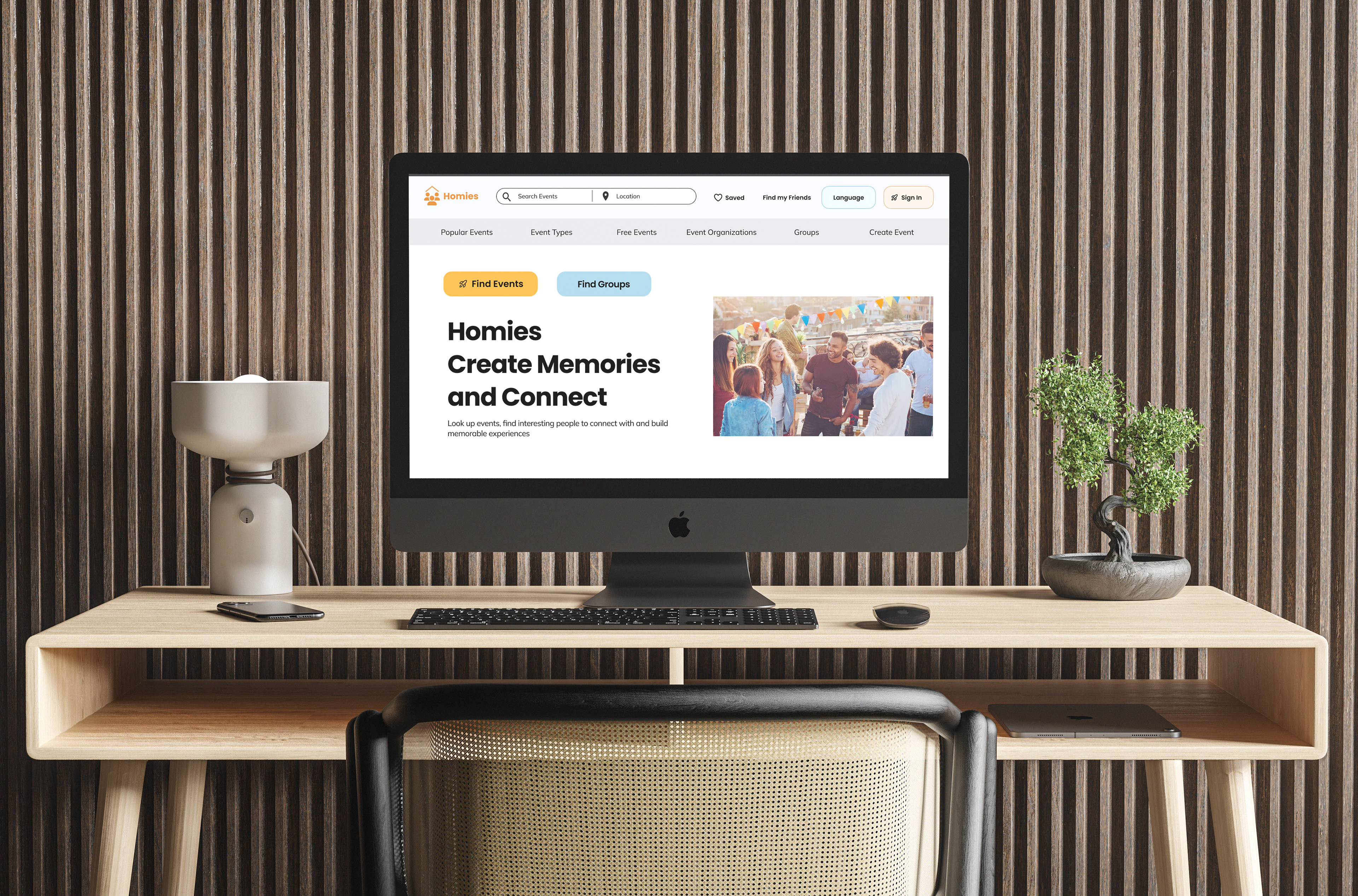
Solo UX/UI Designer Emily Ko
Research, synthesis, interaction design, prototyping, usability testing
February 2024 - April 2024
Problem Definition
Research revealed that users who RSVP’d to events often did not attend due to:
1. Uncertainty about who else would be attending, increasing social anxiety.
Research revealed that users who RSVP’d to events often did not attend due to:
1. Uncertainty about who else would be attending, increasing social anxiety.
2. Lack of accountability or commitment after RSVP.
3. Insufficient information and reassurance about what to expect at the event.
Research
Step 1: Research real people with a survey to see why they are not attending an event they said they would attend on the day of the event.
Link to survey: Social Product Scenario
Step 2: Research the app store to see what issues users are having with the existing websites on the market, like Eventbrite, Meetup, and Facebook events.
Step 1: Research real people with a survey to see why they are not attending an event they said they would attend on the day of the event.
Link to survey: Social Product Scenario
Step 2: Research the app store to see what issues users are having with the existing websites on the market, like Eventbrite, Meetup, and Facebook events.
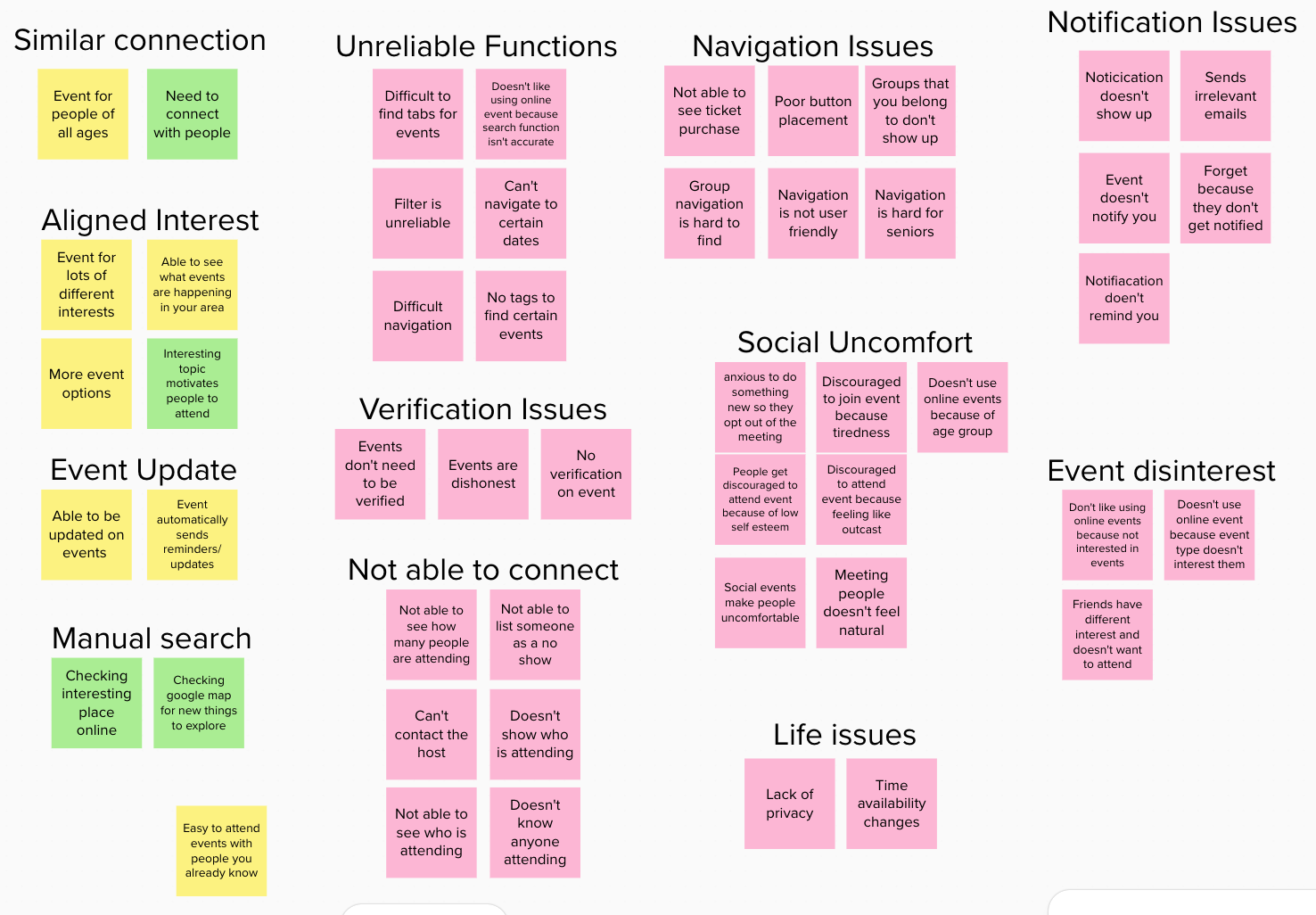
Step 3: Organize notes into an affinity map
Key Research Insights
- Users often RSVP impulsively but end up not following through because of anxiety, uncertainty, or because they forgot they signed up for an event
- Seeing mutual connections or other attendees reduces fear of attending alone.
- Users wanted lightweight commitment signals rather than hard commitments.
- Existing platforms focus on event discovery, not follow-through.
Design Principles
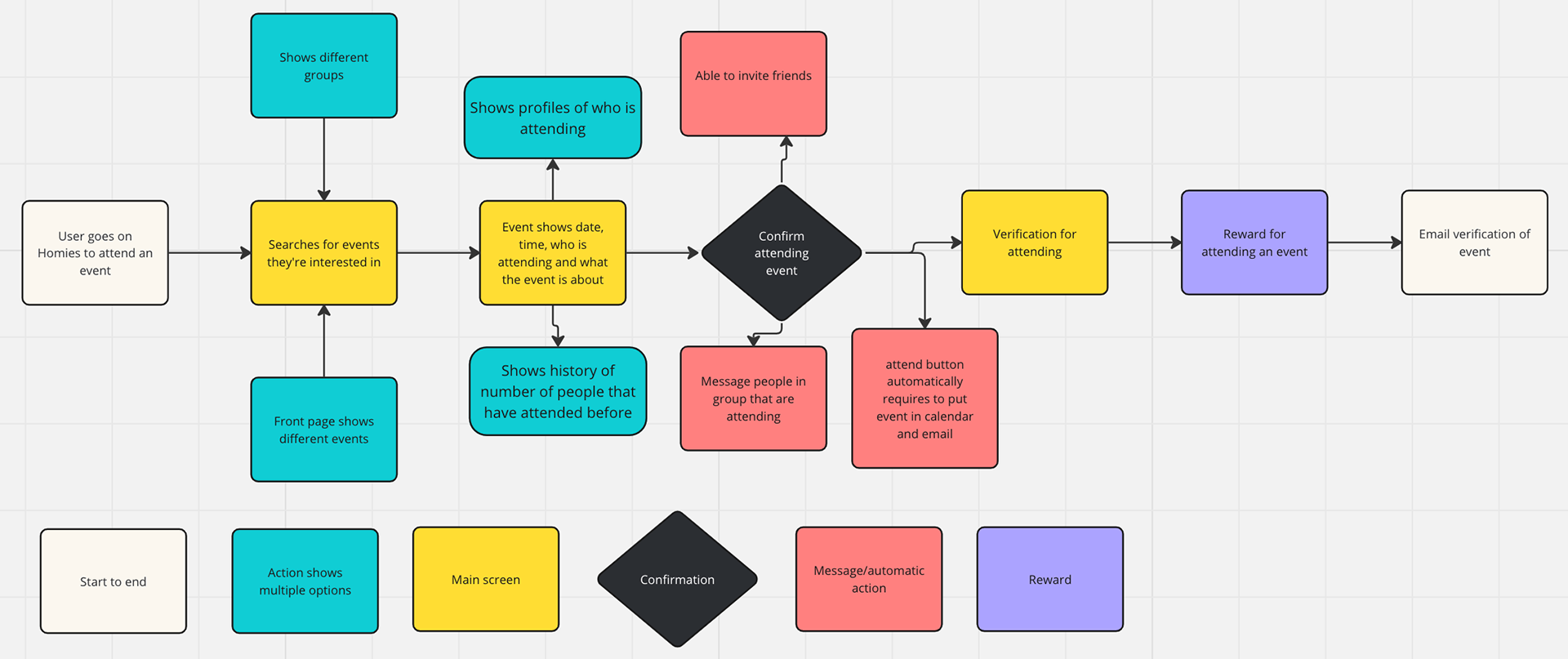
Based on my research, I focused on:
- Reducing uncertainty before attending
Based on my research, I focused on:
- Reducing uncertainty before attending
- Increasing social reassurance
- Creating gentle commitment without pressure
WireFrame
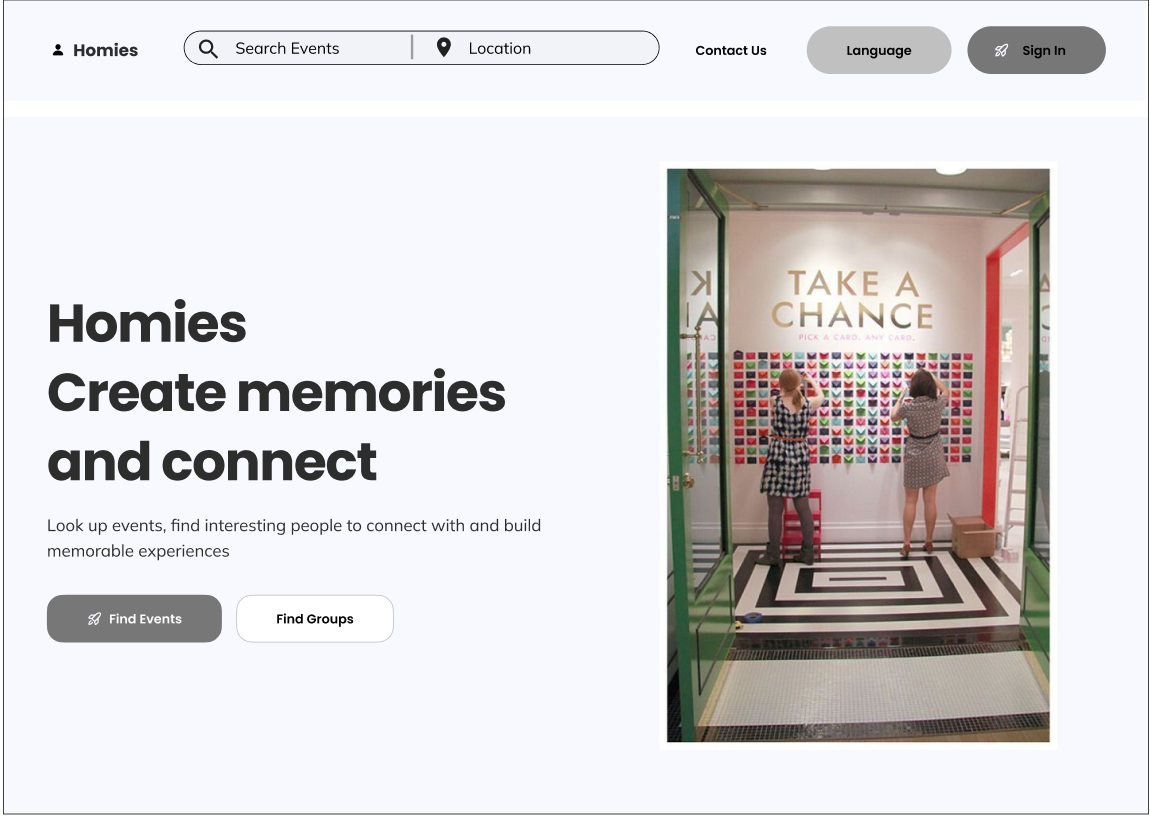
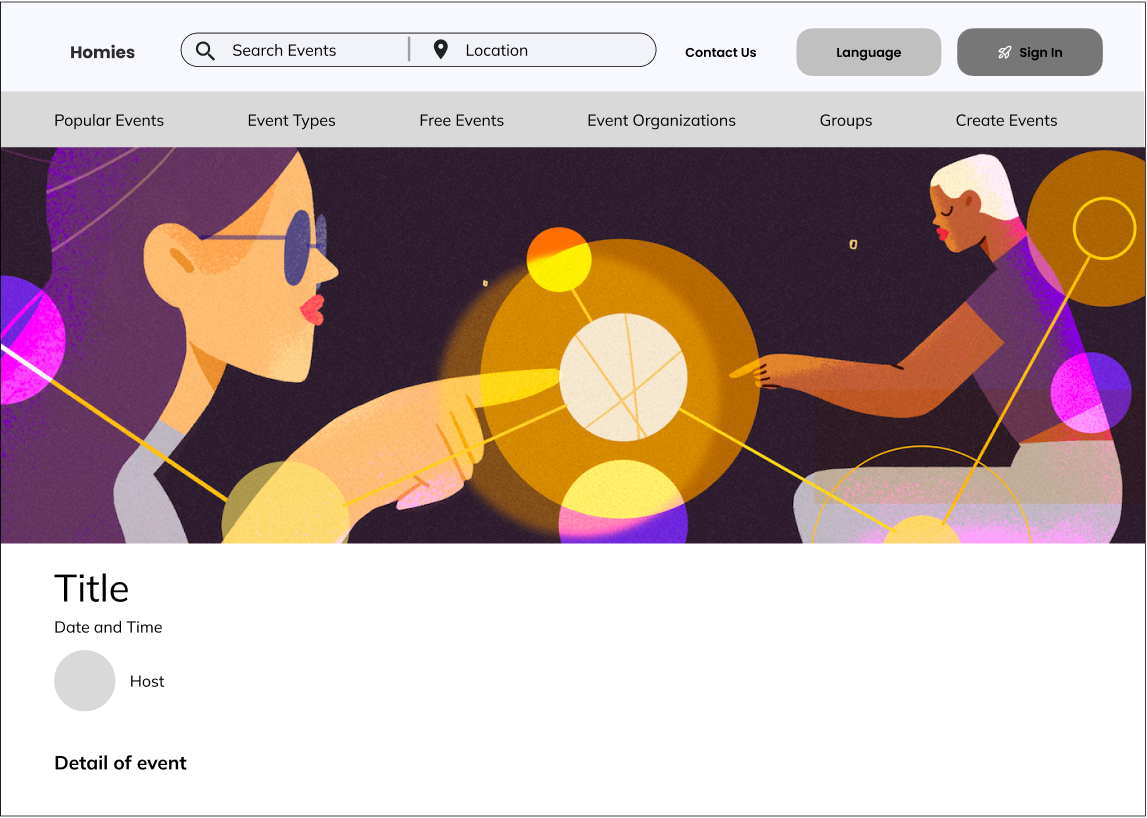
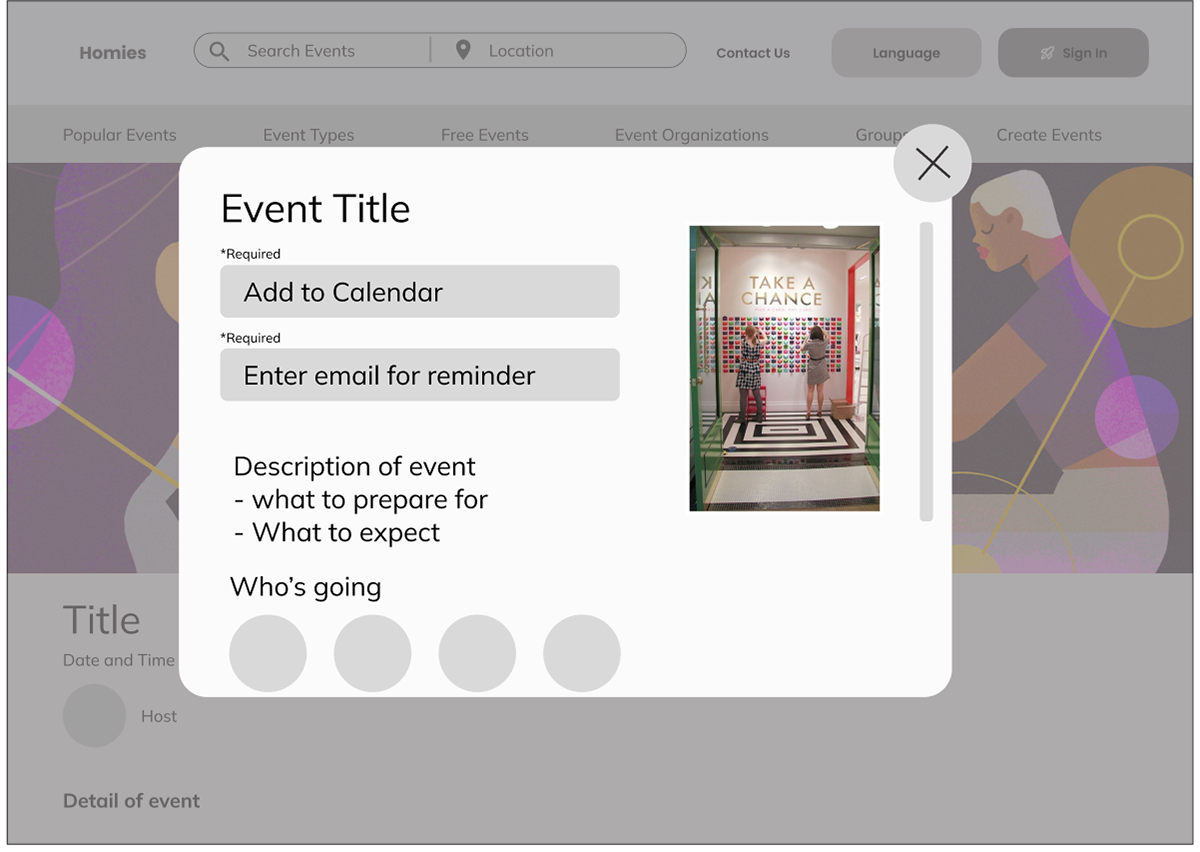
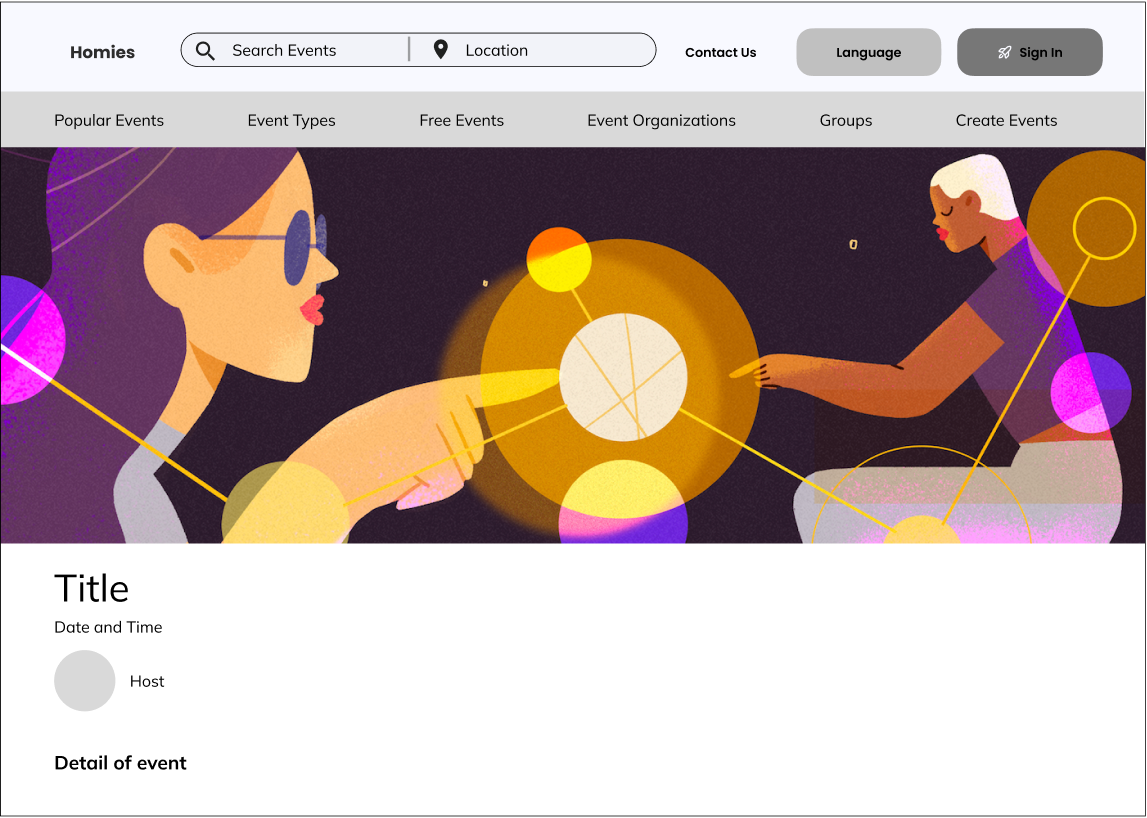
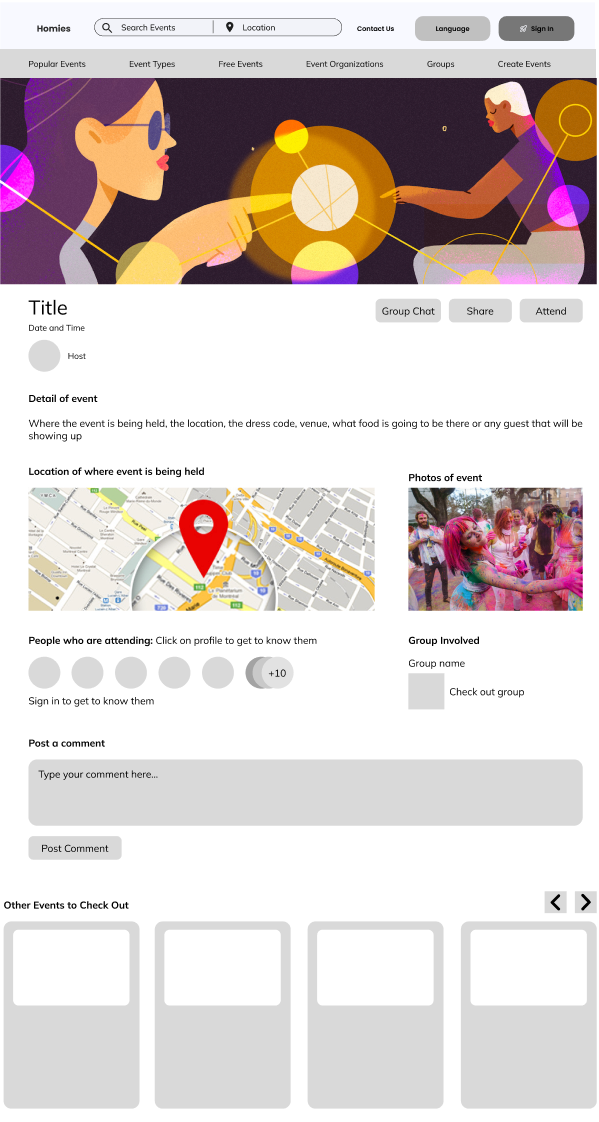
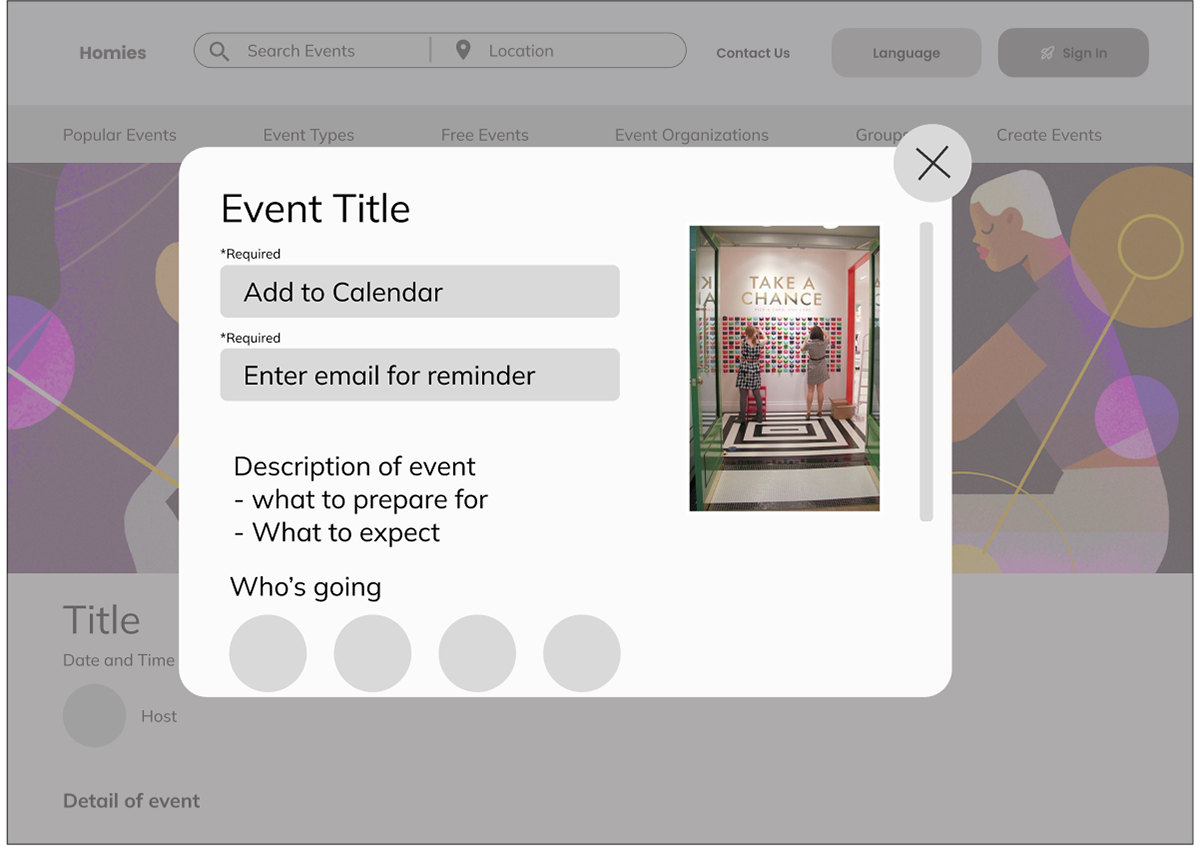
Left to right
- The home page is the first and it is a welcoming, straightforward page
- The middle page is the event page when the user clicks on an event
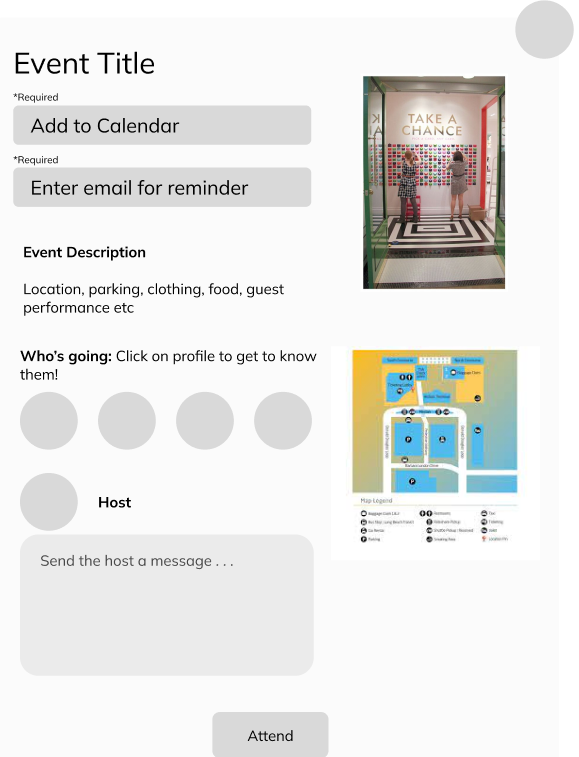
- The right page is the pop-up screen that shows up when the user clicks on 'attend'
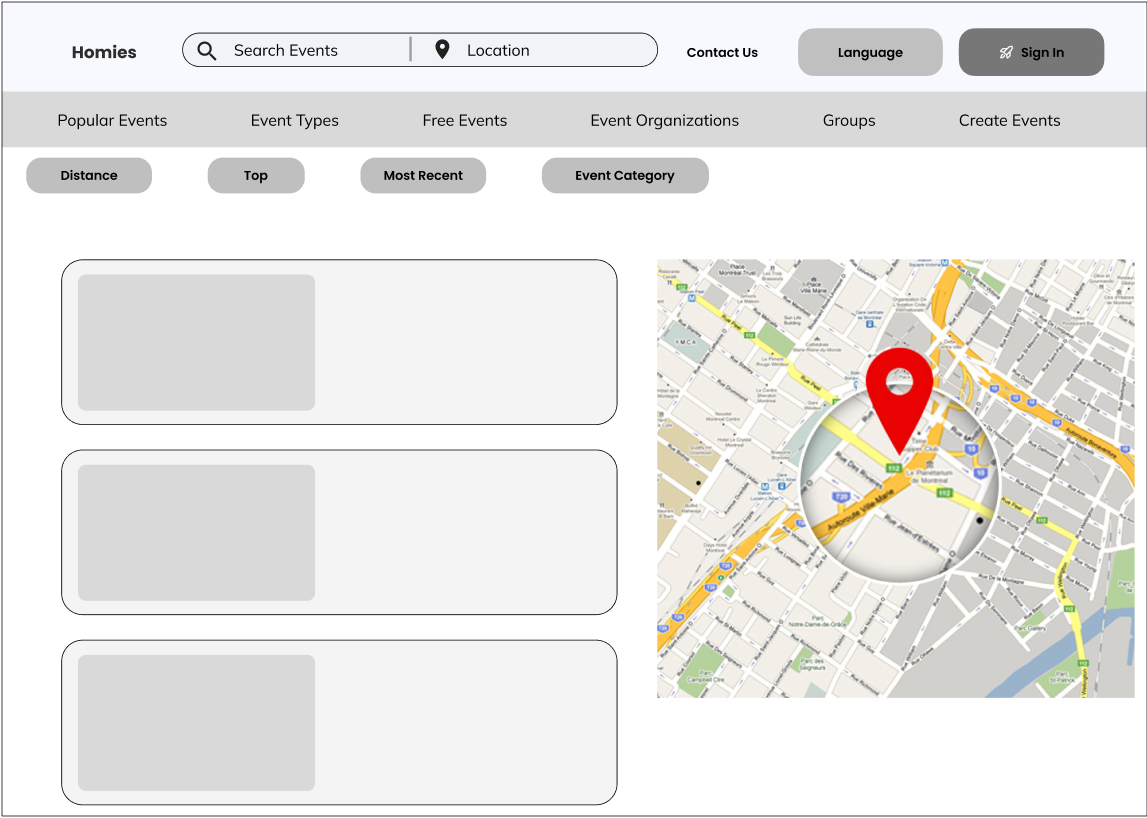
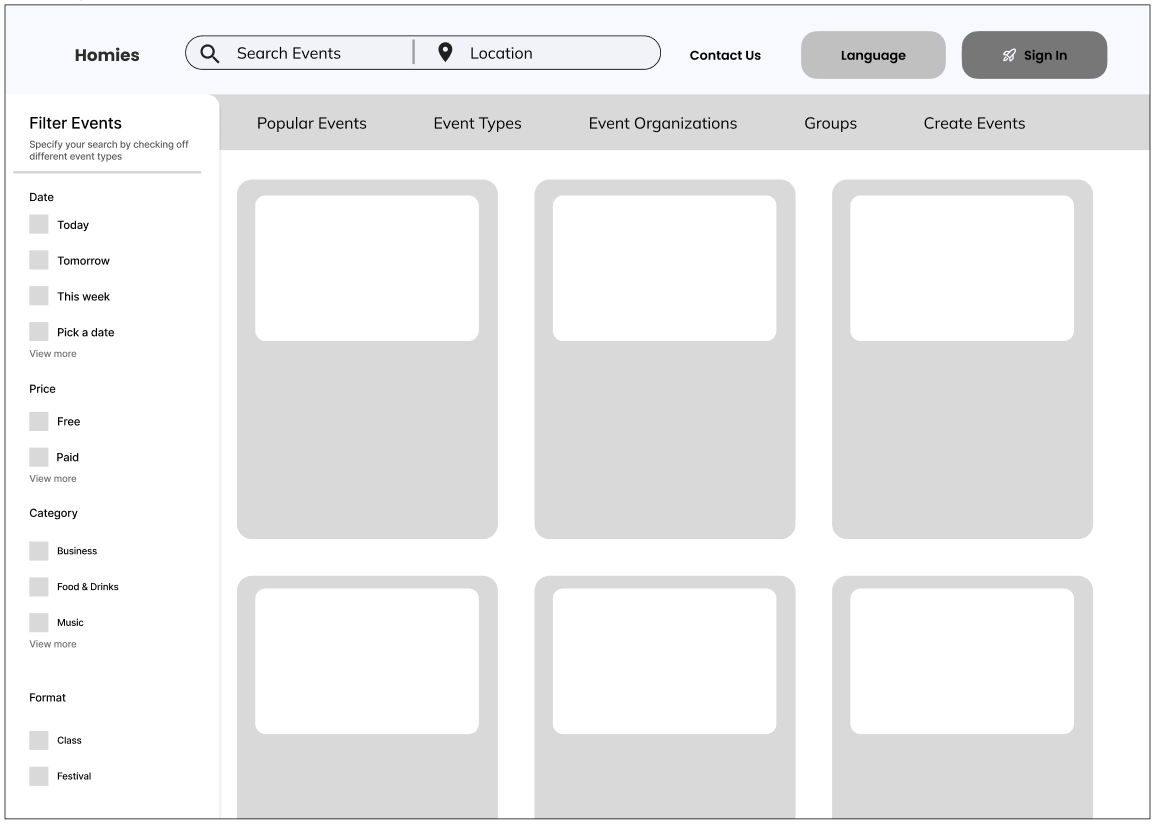
Layout Ideas
- The box option is better because of visibility, along with flexibility for the user
- The right page also has a more minimal aesthetic
- Having a filter option is important for the user when narrowing down their search
User Test
I interviewed 3 users to test the effectiveness of the website in how it reads visually, how it performs, and if the user feels more motivated to attend the event
Pros:
- The attendance confirmation checkbox acted as a psychological commitment device. Users expressed that actively confirming attendance made the decision feel more intentional, increasing follow-through without creating pressure.
- The navigation through the whole website is easy to follow and understand
Cons:
- Most users struggled with finding the 'find events' button
- The icons on the event tabs on the second page were hard to understand
- The event page was a little unorganized for some of the users and needed more hierarchy
Round 1: Key Findings
- Users struggled to locate the primary call-to-action, “Find events,” indicating a hierarchy issue
- Icons lacked clarity, increasing cognitive load
- Event pages lacked a clear structure, making it harder for users to imagine attending
Design Changes:
Design Changes:
- Elevated primary CTAs and clarified navigation hierarchy
- Simplified and labeled icons
- Reorganized event pages to surface social proof earlier
Round 2 of User Testing
Pro:
- A checkbox is the most helpful for users
- Being able to message the host directly builds better communication
- Being able to see other participants going to the event and mutual friends makes the experience feel less daunting
Con:
- The colors should be more vibrant for better color accessibility
- Organization for the event of the page on hierarchy could be changed so that there are visuals of past comments, what the group is involved in, and clear links
Changes Made
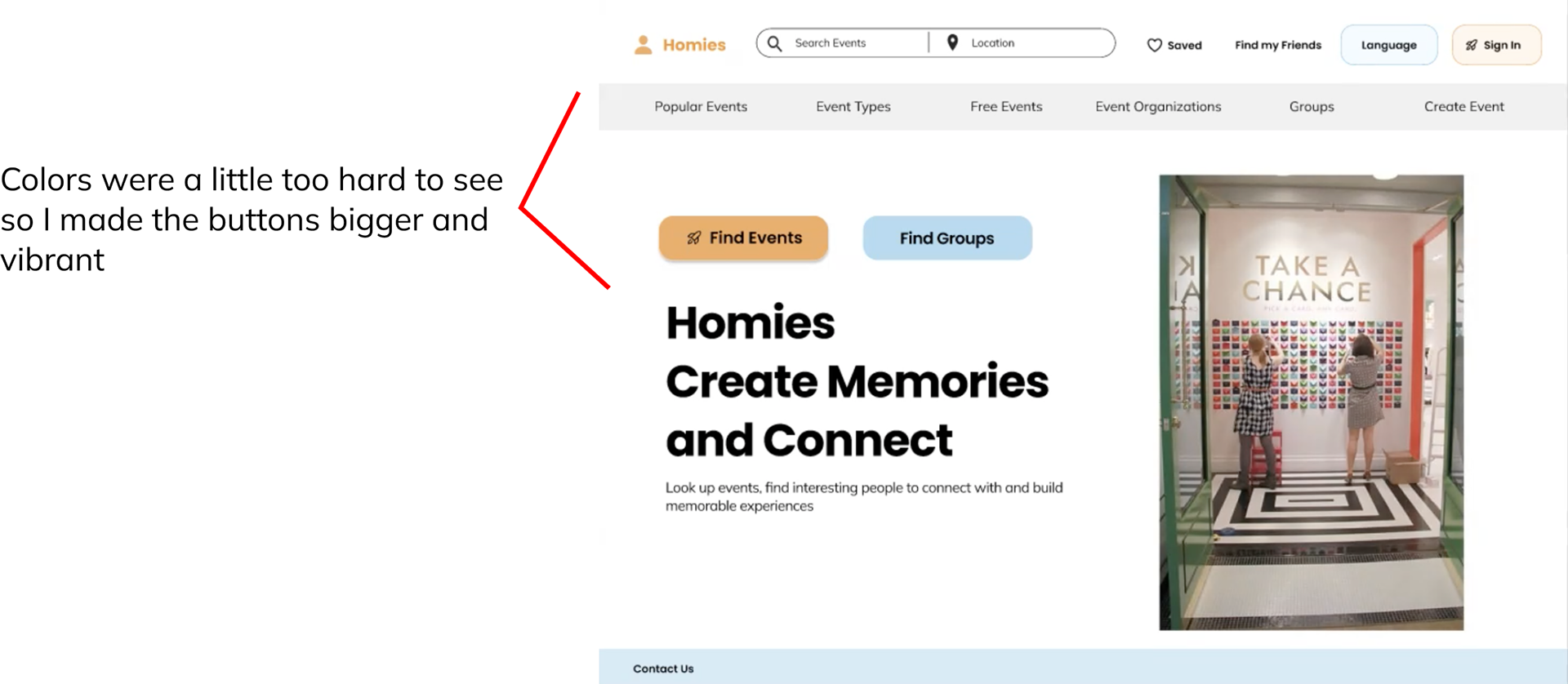
Before
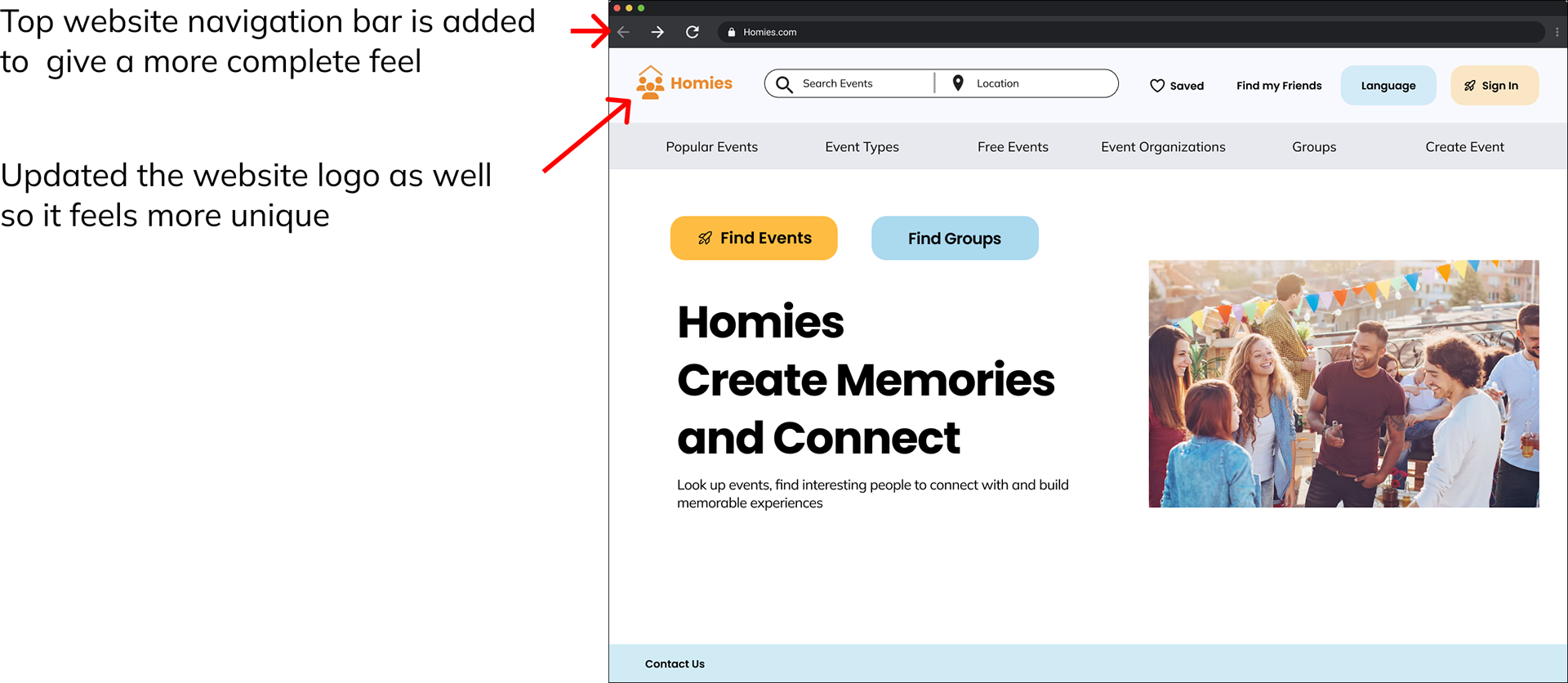
After
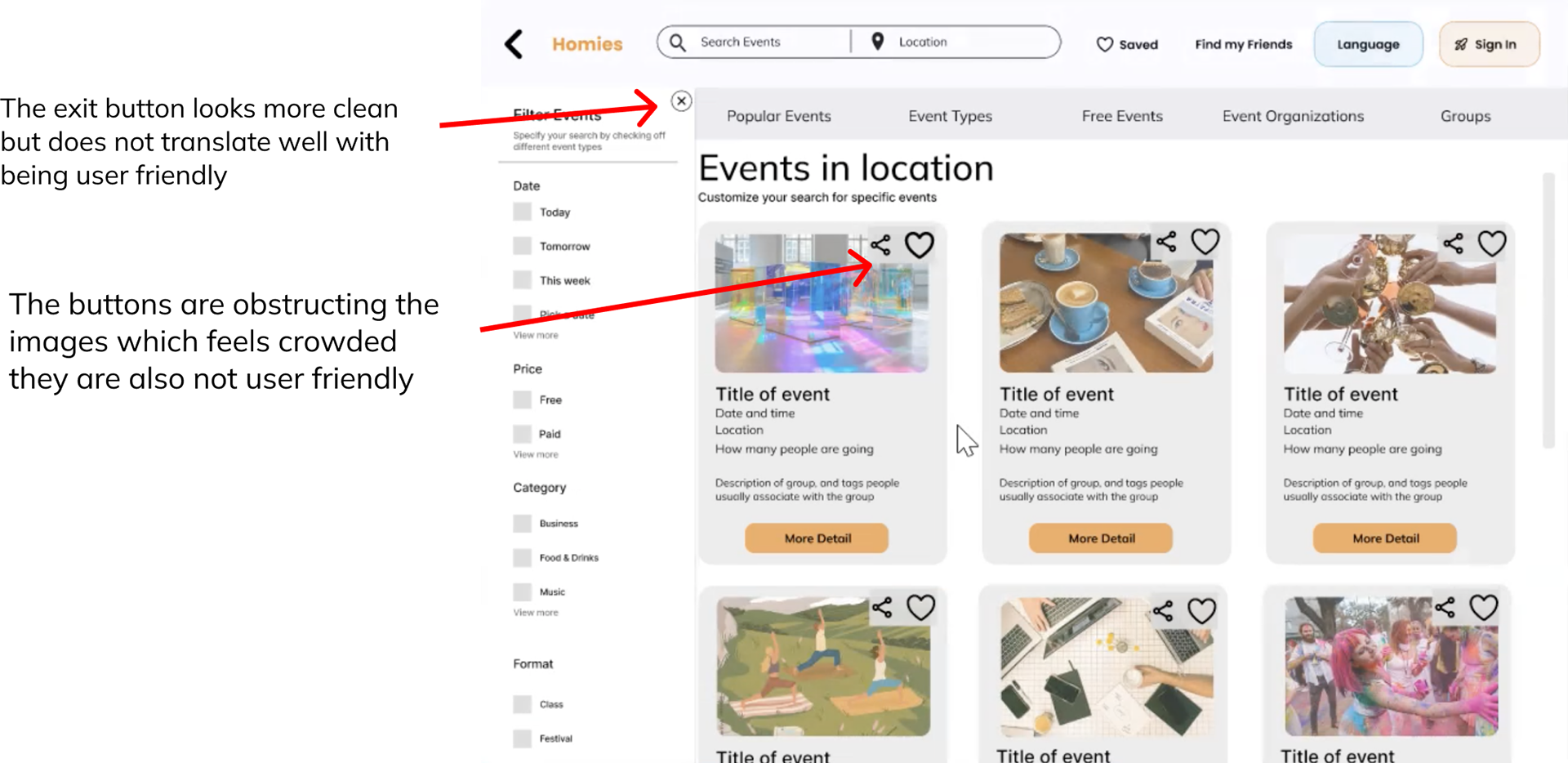
Before
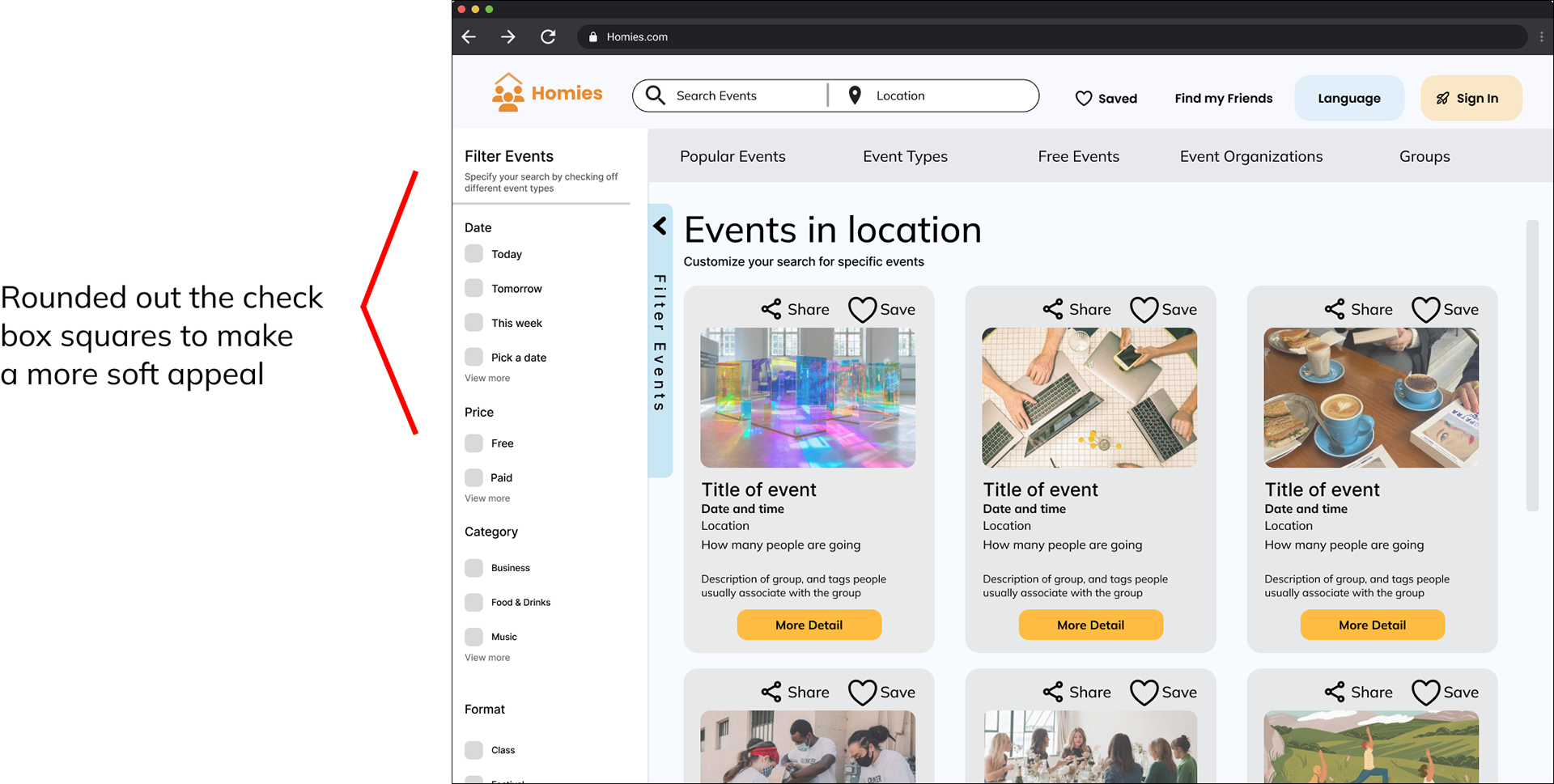
After
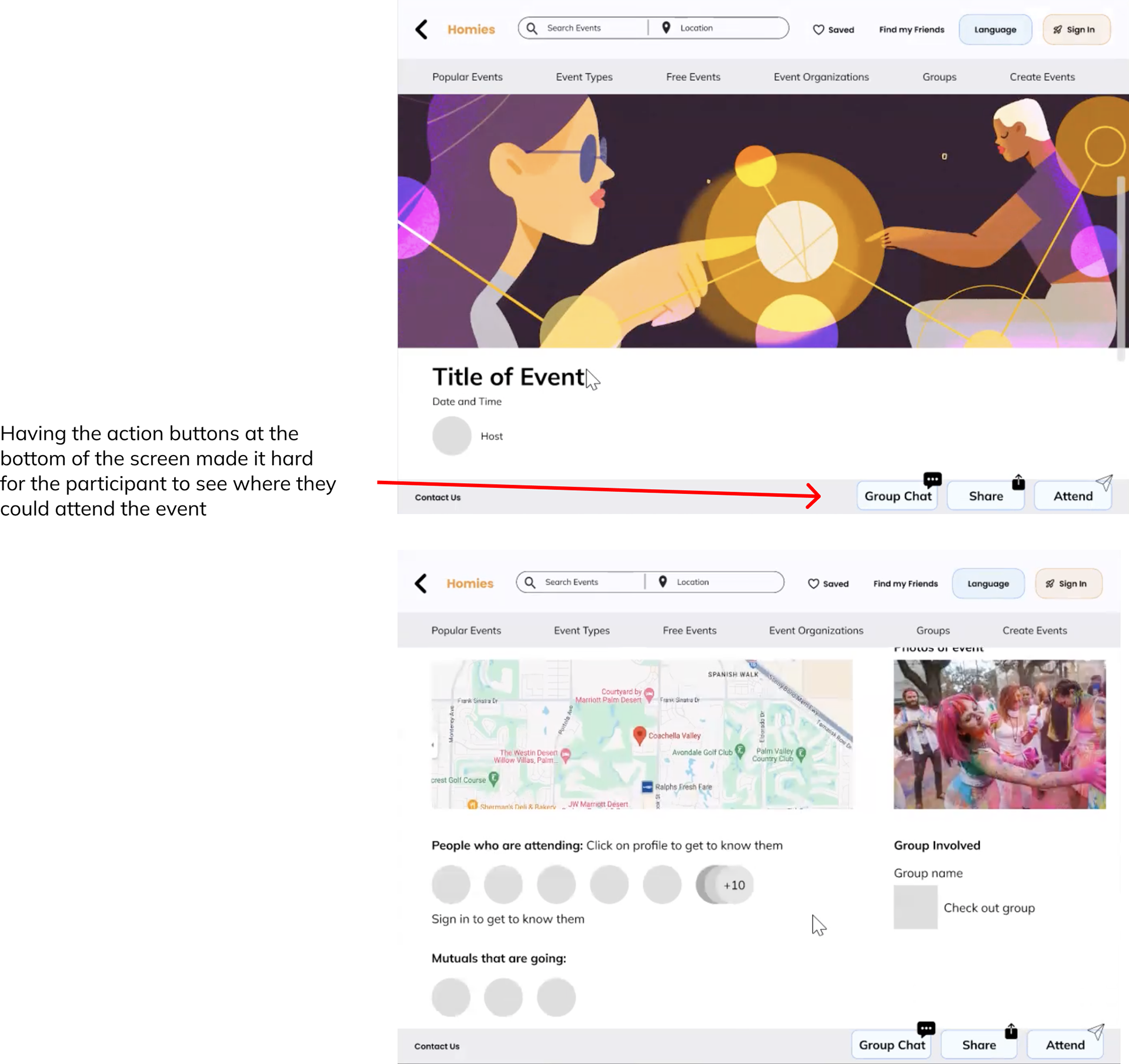
Before
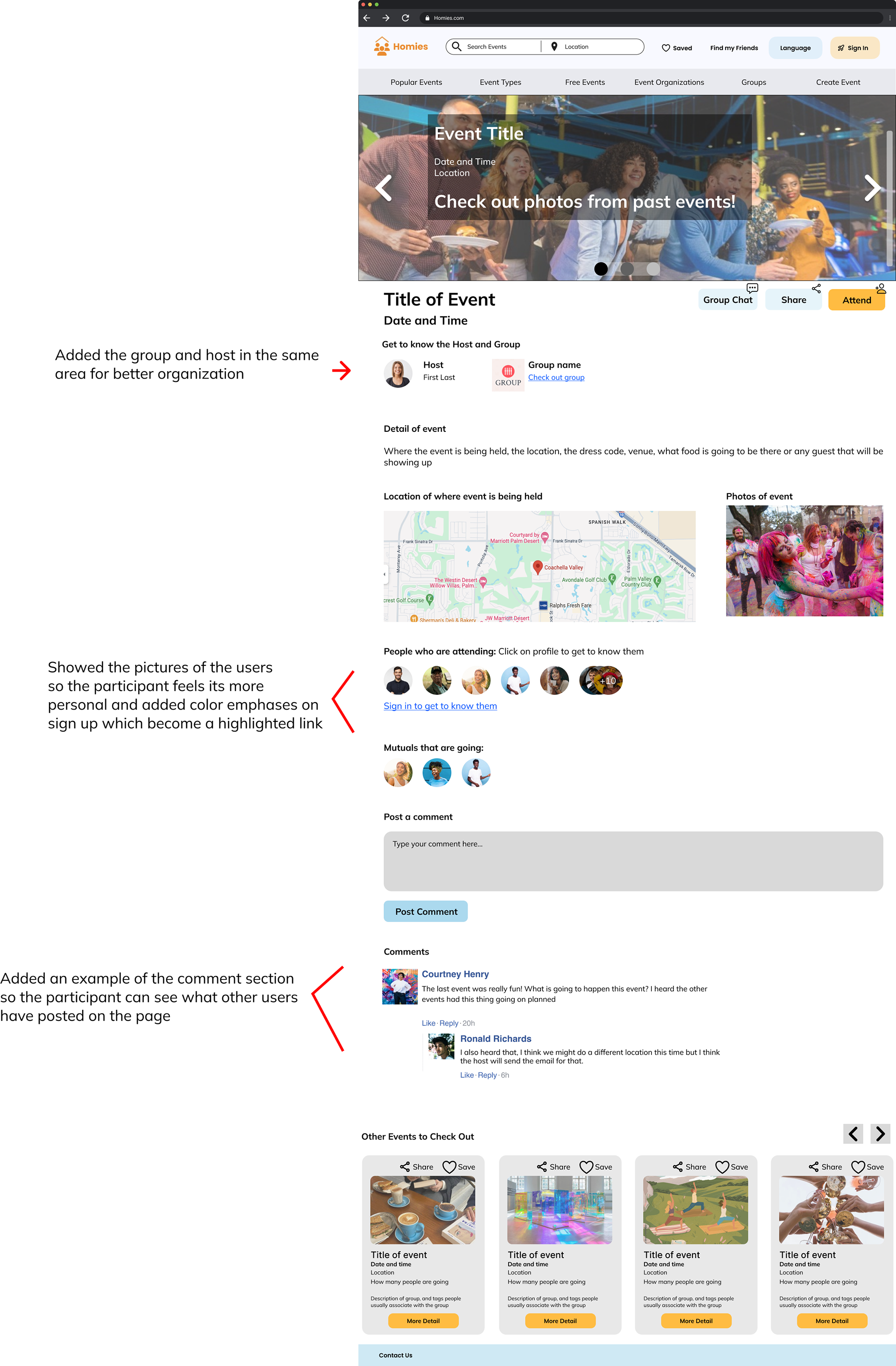
After
Prototype
Open on a bigger screen for a better experience
Conclusion
Making a product with a clear goal has helped me connect with participants on how I, as a designer, can improve their user experience when it comes to building a product based on community. Many parts of UX/UI are editing what others may believe to be small, minor details is very important when it comes to the outcome of creating a successful, user-friendly design. In the future, I will keep in mind how important keeping the icons and presentation consistent in the product design.